
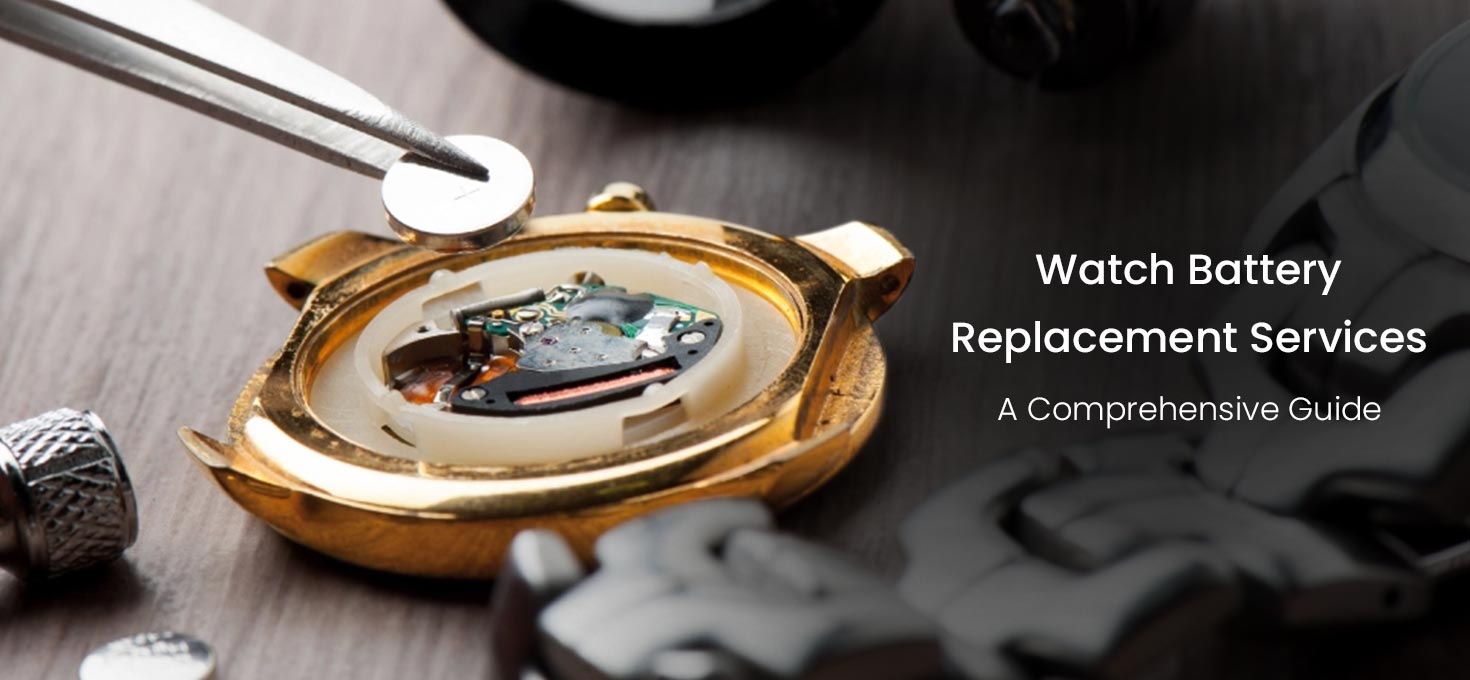
Watches operate on two primary types of movements: mechanical, driven by intricate gears and springs, and quartz, powered by a battery that energizes an electronic oscillator for precise timekeeping. In quartz watches, the battery is critical, providing the energy to vibrate the quartz crystal, ensuring accurate timekeeping. This blog delves into exploring the types of watch batteries, how to identify them, their lifespan, common issues, signs of a dying battery, and the advantages of each battery type and where to go for authentic watch battery replacement services.
Types of Watch Batteries
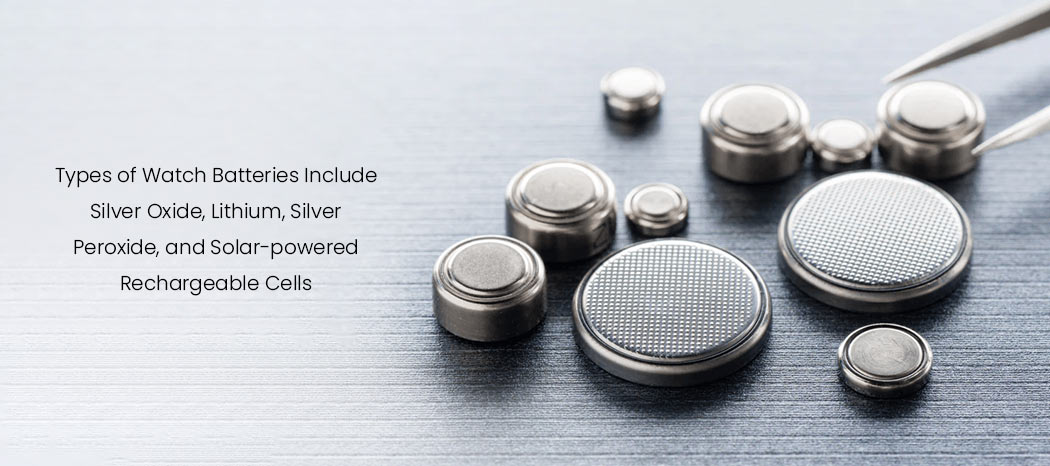
Quartz watches rely on various battery types to suit different designs and functionalities. The most common types of watch batteries include silver oxide, lithium, silver peroxide, and solar-powered rechargeable cells, with the latter two being less prevalent but noteworthy.
- Silver Oxide Batteries: These are the most widely used batteries in quartz watches, offering a stable 1.55-volt output. Their compact, button-shaped design makes them ideal for most standard watches, including those with basic timekeeping or features like date displays. Silver oxide batteries are reliable and cost-effective, making them a staple in new age watches.
- Lithium Batteries: Found in high-performance or multifunction watches, lithium batteries deliver around 3 volts and are suited for watches with energy-intensive features like chronographs or digital displays. They perform well in extreme temperatures and have a longer shelf life, reducing the frequency of watch battery replacement.
- Silver Peroxide Batteries: Silver peroxide batteries, using silver(II) oxide, were historically used in some quartz watches for their high energy density. However, their voltage instability and past use of mercury have made them largely obsolete. You will rarely encounter these batteries today, as silver oxide alternatives are preferred for their consistent performance.
- Solar-Powered Rechargeable Cells: Solar watches use photovoltaic cells integrated into the dial to convert light into energy, charging a rechargeable battery (typically lithium-ion). These eco-friendly types of watch batteries can last up to 10–20 years with regular light exposure, significantly reducing the need for any replacement. However, they require consistent light to maintain charge.
- Mercury Oxide Batteries: Once common, mercury oxide batteries (1.35 volts) are now obsolete due to environmental concerns over mercury content. Nowadays, providers of watch battery replacement services use silver oxide or lithium batteries as safer, more reliable alternatives.
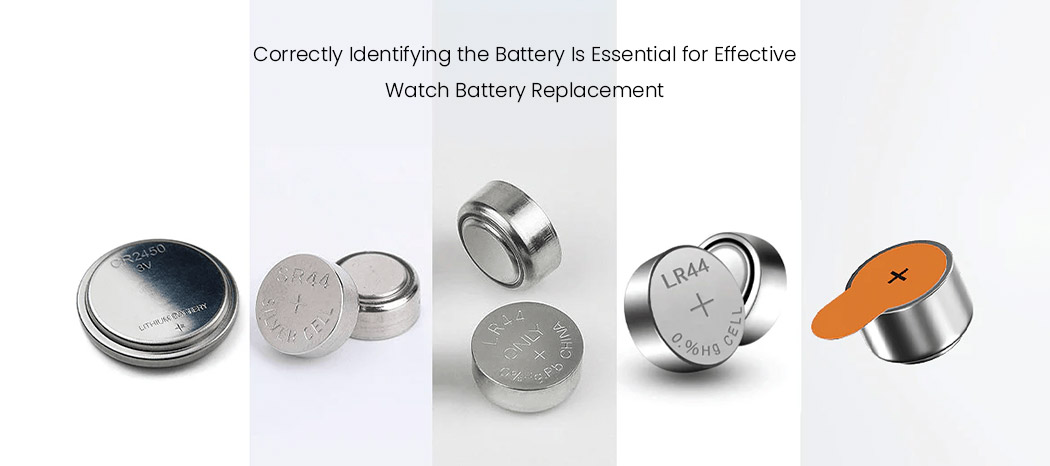
Each battery type is identified by a code (e.g., SR626SW for silver oxide, CR2032 for lithium), guiding technicians during watch battery replacement to ensure compatibility.
How to Identify the Type of Watch Battery
- Consult the Watch Manual: The manufacturer’s manual or online specifications for the watch model typically list the required battery type.
- Inspect the Battery: When opened by a professional, the battery’s code (e.g., SR920SW or CR1620) reveals its chemistry and size. The first letter indicates the type (S for silver oxide, C for lithium).
- Professional Assessment: The service centers providing the watch battery replacement services use expertise to identify batteries, especially for complex or vintage watches, ensuring no damage to the movement.
- Check Case Markings: Some watches have battery details engraved on the case back, though this is rare.
Using the wrong battery can harm the watch, making professional watch battery replacement services critical for accurate identification and installation.
Lifespan of Watch Batteries
The lifespan of types of watch batteries varies based on battery type, watch features, and usage:
- Silver Oxide Batteries: Last 2–5 years in standard watches, but high-drain features like backlights may reduce this to 1–3 years.
- Lithium Batteries: Offer 3–7 years due to higher capacity, ideal for multifunction watches.
- Silver Peroxide Batteries: Historically lasted 2–4 years but are rarely used now due to performance issues.
- Solar-Powered Cells: Can last 10–20 years with regular light exposure, though prolonged darkness may deplete the charge.
- Environmental Factors: Extreme temperatures or frequent use of power-intensive features can shorten battery life.
Common Issues with Watch Batteries
While watch batteries usually last several years, it is important to ensure that they are replaced on time. Battery-related problems can disrupt a watch’s performance. Common issues include:
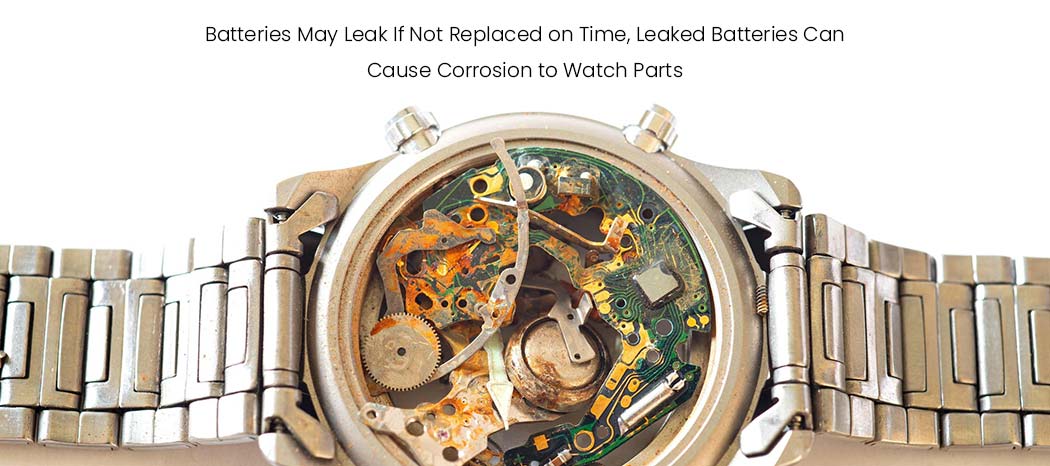
- Leakage: A dying battery may leak corrosive chemicals, damaging the movement. Timely watch battery replacement mitigates this risk.
- Improper Installation: Poor contact from incorrect installation can cause erratic timekeeping, requiring professional watch battery replacement services.
- Voltage Mismatch: Using a battery with incorrect voltage disrupts the movement, affecting accuracy.
- High Power Consumption: Features like GPS or perpetual calendars drain batteries faster, necessitating more frequent watch battery replacement.
- Solar Cell Issues: Solar watches may stop if not exposed to light, or the rechargeable cell may degrade over time, requiring specialized servicing.
Professional services address these issues with high-quality batteries and precise installation.
Indicators That a Watch Battery Is Dying
Recognizing a dying battery prevents unexpected failures and damages to your luxury watch. The key signs include:
- Erratic Timekeeping: Slow, skipping, or inconsistent timekeeping signals low battery voltage.
- Dim Features: Backlights, alarms, or digital displays may weaken or fail.
- Complete Stoppage: The watch stops entirely when the battery is depleted.
- Second Hand Stutter: Some watches show a two-second tick as a low-battery warning.
- Solar Watch Failure: Solar watches may stop in prolonged darkness, indicating a low or degraded rechargeable cell.
These signs warrant professional watch battery replacement services to avoid damaging the watch.
Pros of Each Type of Watch Battery
Each of the types of watch batteries offers distinct advantages:
- Silver Oxide Batteries:
Stable 1.55V output ensures accurate timekeeping.
Compact size suits slim watches.
Cost-effective and widely available for watch battery replacement. - Lithium Batteries:
Higher 3V output supports complex watch functions.
Longer 3–7-year lifespan reduces replacement frequency.
Reliable in extreme temperatures. - Silver Peroxide Batteries:
High energy density for compact designs.
Limited use today due to voltage instability and environmental concerns. - Solar-Powered Rechargeable Cells:
Eco-friendly, reducing watch battery replacement needs.
Long lifespan (10–20 years) with light exposure.
Charges from natural or artificial light, ideal for daily wear. - Mercury Oxide Batteries:
Obsolete due to environmental concerns, with no significant modern advantages.
The Importance of Professional Watch Battery Replacement
Replacing batteries is usually not very challenging; however, one should always be very careful, as any small miss can cause significant damage to the luxury watch. Keeping these precautions in view, it is strongly recommended that you should go on to change the batteries only if you have the required tool. Considering visiting an authorised service center like Kapoor Time Crafter for any watch service related issues, including battery replacement, is the top advice. The professional watch battery replacement services ensure precision, using specialized tools to safely open and seal watch cases, preserving water resistance. Expert technicians select high-quality batteries to prevent leakage and ensure longevity while inspecting for issues like worn gaskets. This meticulous approach maintains the watch’s functionality and reliability, making professional servicing essential for effective watch battery replacement.
Kapoor Time Crafter
Kapoor Time Crafter is a premier watch service center in New Delhi. We have evolved over 50 years into a hub of horological excellence. Authorized to service 24 prestigious brands, our trained technicians provide expert care, including full movement overhauls, ultrasonic cleaning, parts replacement, precision testing and battery replacement. Watches are meticulously serviced to meet stringent brand standards. At Kapoor Watch Company, we prioritize outstanding luxury watch services, ensuring your luxury timepiece retains its elegance with unmatched expertise. Visit Kapoor Watch Co. website to book an appointment today.



Recent Posts
Recent Comments
Archives